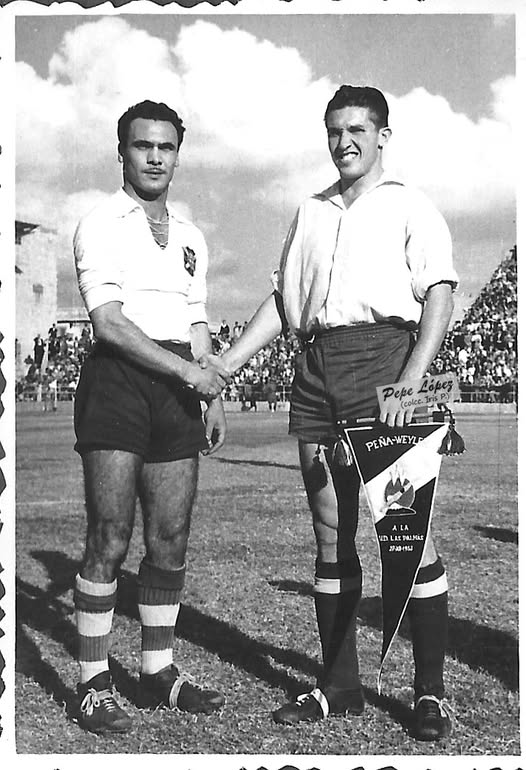
History of football in the Canary Islands: tradition, passion and legacy.
The Canary Islands have a football tradition dating back to the early 20th century, having been a breeding ground for talent for over a century. The oldest club in the Canarian top flight, Club Deportivo Tenerife, was officially founded on August 8, 1922 (with precursors dating back to 1912). In Gran Canaria, the need to retain local talent spurred the historic merger of five clubs, giving rise to Unión Deportiva Las Palmas on August 22, 1949, a development that boosted professional football in the archipelago.
Over the decades, both clubs consolidated their positions. CD Tenerife debuted in La Liga in 1960, reaching the top tier in record time (two seasons, 1951). Football was played in iconic venues such as the Heliodoro Rodríguez López Stadium in Tenerife (inaugurated in 1925) and the Insular Stadium in Gran Canaria, epicenters of regional rivalry and elite football in the islands.
The stadiums, uniforms, and colors of local clubs have shaped the aesthetic of classic football in the region. Understanding this history allows us to grasp the evolution of football shirt designs, sportswear fashion, and the importance of historical kits as cultural artifacts. Each historical era of football in the Canary Islands and of teams like Club Deportivo Tenerife and Unión Deportiva Las Palmas inspires vintage football fashion and retro jerseys, allowing a connection with the legacy, passion, and spirit of classic football in the province.
View online store

 Search